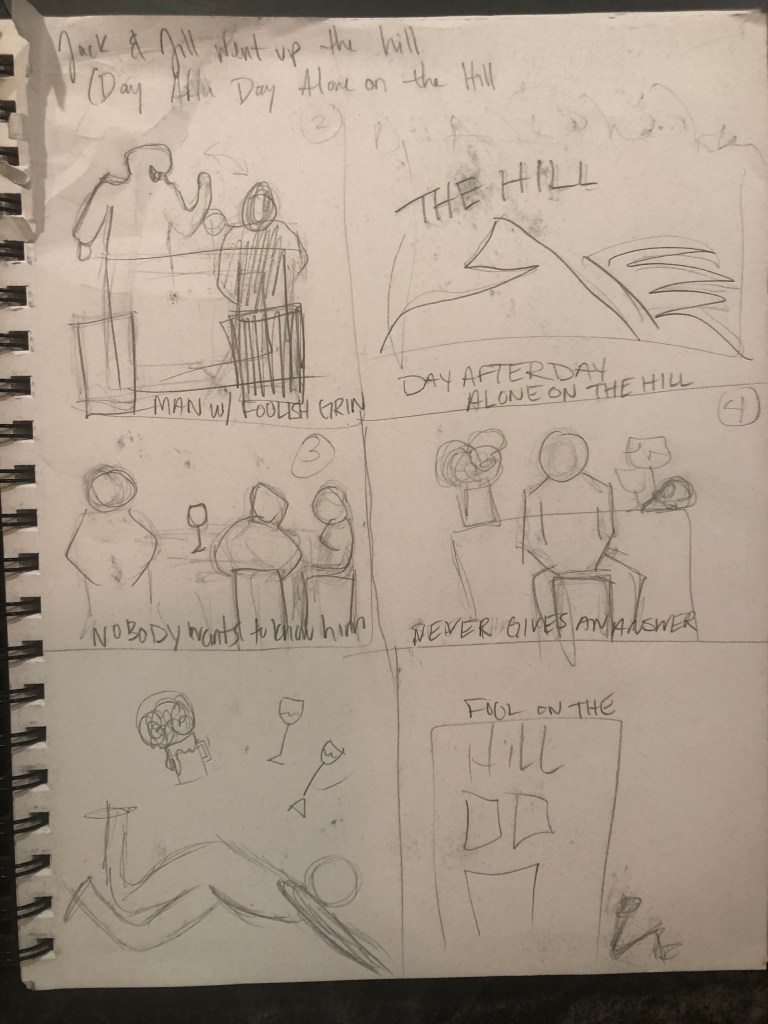
Design Brief Project 3

1. What is your topic? My topic is about eating while working from home

2. What is your interest in the chosen topic? I enjoy anything health care related. I am notorious for eating when not hungry and I would like to shed light on it for others who are in the same boat. 

3. Who do you feel your audience might be? Anyone working from home. Anyone who struggles with binge eating.

4. What is your goal in presenting this information? My goal is to inform about over eating and different ways to substitute food items to create a healthier diet when stuck at home. But one should always consult with your health care provider first

5. List a couple of your current research resources.

American Heart Association (2018, April 18). Why Do I Eat When I’m Not Hungry?. Retrieved from https://www.heart.org/en/healthy-living/healthy-eating/losing-weight/eating-when-not-hungry

Helm, J. (2020, March 25). How to Work From Home Without Gaining Weight. Retrieved March 31, 2020, from https://health.usnews.com/health-news/blogs/eat-run/articles/how-to-work-from-home-without-gaining-weight

research topic: eating while working from home

research question: What should we eat when working from home

conclusion statement: In conclusion, you can find different outlets and substitute unhealthy foods for a better life style when working from home. 

Final Project 2

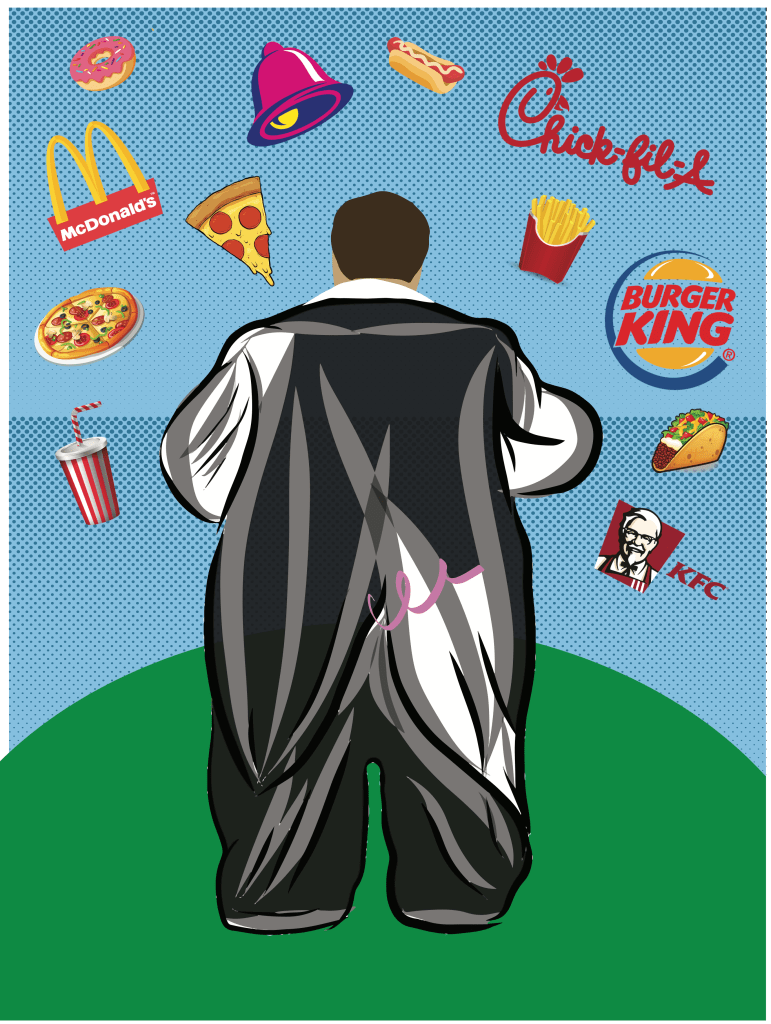
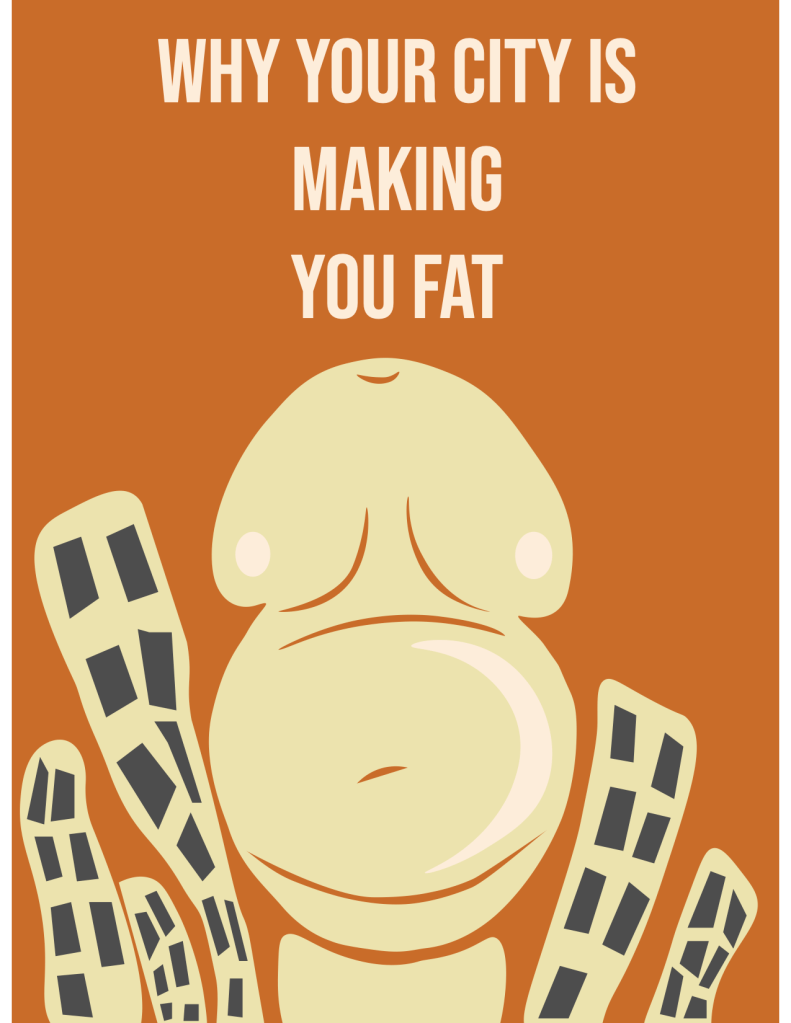
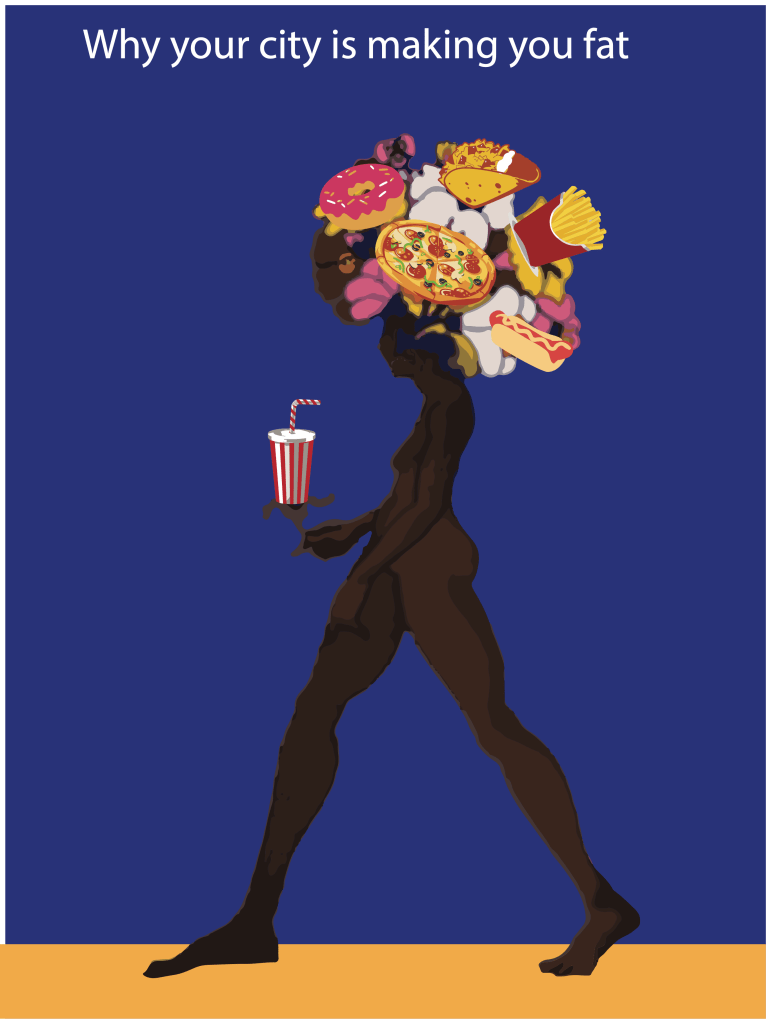
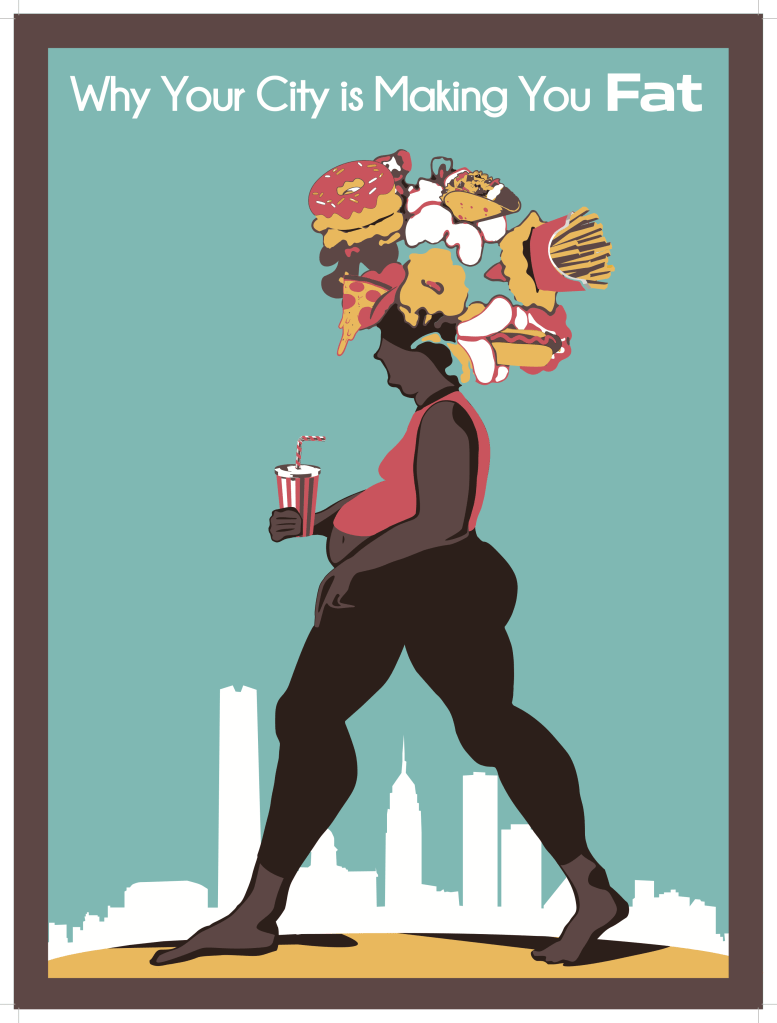
Why Your City Is Making You Fat

This is my final iteration of project 2. My artist was Milton Glacier and my article is stated as above. I enjoyed recreating this piece of art from him. I ended up using a different color palette than previously and I think it turned out great. I used the curved pen tool for many things in this image. I used image trace for the food on top of her head and stuck to a 5 color palette.

Event Paper

So I was going to go to another event this semester, but due to cancelations I will talk about another event I went to earlier this semester.

Ade Hogue had an Artist Lecture at the Tivoli Turnhalle Tower. Ade hogue is a lettering artist. He doesn’t just “push pixels” as he said in his lecture, he gets to “take ideas and turn them into something physical.” There are a lot of lettering artists out there. What I like most about Ade is that he is humble. He is personable and understanding of all situations. Another thing that he said that I really connected with is that he doesn’t believe in networking, he believes in connections because you are building a friendship and understanding each other. 

Hogue talked about his past and how he came to where he is. We have a lot in common in that regard. He started in engineering because his father expected him to. I started in medical because my father wanted me to have something practical and stable. His advisor told him to “try something else,” and my advisor told me to look at other professions that didn’t have to do with medical. Him and I both enjoy problem solving and structure. I related to Ade in more ways than just art. Seeing him pursue something that he is passionate about and enjoys doing is something I strive to have. 

What Hogue emphasized most in his lecture is having a set of skills and sharing those skills with others. His method of improving a set of skills is to define, develop, and share. Defining a set of skills is making a decision on what you want to be good at. But “sometimes your calling calls you.” You may have an idea of what you want to achieve, but as you go through the life process, you can mold your idea into something else because of all the knowledge you learned along the way. It’s good to define something you want, because then you have a path to get there, even though it might change. 

‘Develop’ is Hogue’s next step in improving a skill set. He says practice doesn’t make perfect, but “practice makes easier.” I can not agree more with this. If you have gotten to the point where you are perfect in your skill, then I believe you aren’t challenging yourself. If it’s perfect, it’s probably too easy. Hogue was improving his skills by creating something new everyday. He had a One Word A Day challenge and put himself on a deadline. This is a great suggestion to really engage in your craft. I hope if the semester gets easier I can focus on a certain skill and improve upon it. I have always wanted to do a One A Day Challenge because I have seen other artists complete it, and it is amazing to see how one progresses throughout their journey. 

The last point Hogue emphasizes is to share. He is a firm believer in sharing his skills with all who want to learn. Some points he makes about sharing is that we all have insecurities, but we can share and learn from our insecurities to make us better at our craft. I personally enjoy when people critique my work because they see things differently than I do. I get so focused on little things that I can forget to look at the whole. Another point he makes about sharing is to replicate and modify. Find someone or something that you like and replicate it. You can learn different techniques and ways of creating something and then apply it to your own craft. After replicating so many times you can start to modify because now you know what to do and are more comfortable doing it.

I enjoyed this artist lecture by Ade because he made a lot of great points. He simplified his lecture in a way that was memorable and easy to retain. He was straight to the point about his craft, history, and improving a set of skills. In the future I will complete a One A Day Challenge on something I enjoy doing because “practice makes easier.”

What is Branding

Wow that was an interesting fact! “Branding has been around since 350 A.D. By the 1500s, it had come to mean the mark that ranchers burned on cattle to signify ownership—a precursor of the modern logo. That is so interesting! I never thought about it that way! I am glad I read this article. I didn’t quite know what ‘branding’ entailed. I thought it was just logos and marketing and designing flyers and packages. 

Mission= a short statement that defines the present state and purpose of your organization. 

Vision= an inspirational and motivational snapshot of what you seek to achieve in the long term. 

-Always good to know for resumes.

Things I need to work on: branding, layout, compositions, web design, marketing

News Headline Poster Design Brief

What is the current news headline you’ve decided to work with and why? 

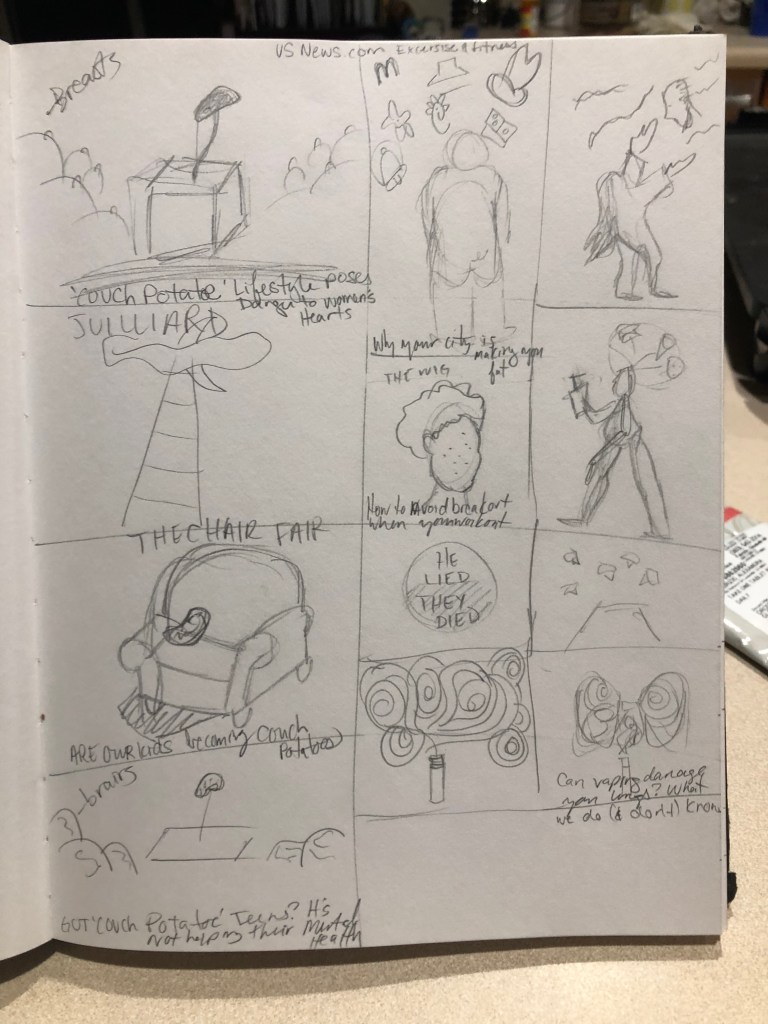
There are a few I want to play with, but I am focusing my topic around health, specifically around fast food and being a couch potato. Some articles I have found are 

-Why Your City is Making You Fat-‘Couch Potato’ Lifestyle Poses Danger to Women’s Hearts

-Got ‘Couch Potato’ Teens? It’s Not Helping Their Mental Health

I love health care and have a passion for teaching a healthy lifestyle. There’s a lot that goes on in healthcare that needs to be told and people need to be educated on. 

Which historically significant designer are you using as an inspiration? List any interesting or relevant biographical details about this person?

My designer is Milton Glaser. And what a challenge this will be! 

“Glaser also is a renowned graphic and architectural designer with a body of work ranging from the iconic logo to complete graphic and decorative programs for the restaurants in the World Trade Center in New York” (miltonglaser.com).

And he also founded New York Magazine which is super cool! He did design in architecture, interiors, and packaging, posters, branding, logos, signage, stationary, and brochures. 

He says it took him 20 years to learn how to draw. 

Describe the visual elements within this designer’s work? What typeface or type style does he/she incorporate? Color palette? Layout and grid style? Is this designer included in a particular genre, era, and/or historical design cannon?

Milton Glaser is a designer-illustrator who uses visual language as his main theme of creation. He is highly inventive and has individualistic work. He created “images full of historical references and the appropriation of vintage typography (Wack, 2014). He took a narrative approach. 

He has a push pin style which is brightly colored narrative illustration with a humorous effect. When looking at his work, he is all over the place between use of all colors, and use of all fonts. He is diverse and likes to do a little bit of everything. His more famous pieces are dark with splashes of vibrant color. Sometimes he’s linear, and sometimes he’s very abstract. Some pieces seem to be in a grid format, but mostly it’s illustrative and scattered. 

Glaser is someone who shaped modern design. 

Discuss relevant themes, concepts, or issues from your designer’s work? i.e. political, corporate, educational.

“This rise of money and propaganda-driven markets put a foul taste in Glaser’s mouth; he expresses a strong distaste for crooked advertising and industries built on intellectual manipulation. While advertising is often seen as the greasy spoon of capitalism, it should come as no surprise that Glaser holds a firm belief in design’s power to do good and create communal ties” (Wack, 2014).

He has worked a lot in education, opening up his own schools and teaching to other students, but his design work doesn’t illustrate that. 

What connections (aesthetic and/or conceptual) can you make with your news headline and your designer?

Well I’m going to make something graphic, playful, and try to use psychedelic colors. I was gonna take one of his own pictures and manipulate it to mean something else. 

Wack. A, Getting to Know Milton Glaser, The Godfather of Modern Design, 2014 https://hyperallergic.com/118140/getting-to-know-milton-glaser-the-godfather-of-modern-design/). 
Is a Designer an Artist

So I don’t think the argument is “is a designer an artist.” I think the article discusses more “is a designer a fine-artist.” And the answer is, it depends. 

“In European academic traditions, fine-art is art developed primarily for aesthetics or beauty, distinguishing it from decorative art or applied art, which also has to serve some practical function” (Wikipedia). 

The article pointed out that designers work for other people’s wants and needs. Designers take a problem, analyze it, and come up with a proposal. Fine artists have more freedom to create what they want.

So design can be a “fine art” if the designer has freedom and is able to use their imagination and create something imaginative, beautiful, and intellectually stimulating, then it can be considered, per definition standards, a fine art. But if the designer is restricted in imagination and is only serving the purpose for advertisement to get people to buy a certain product, then I personally don’t consider it a fine art. It could be considered “art,” but not fine art. More like functional art. 

So really it depends on the situation you are placed in, and what kind of ‘designing’ you are doing. Are you designing something aesthetically beautiful that engages the viewer and makes them think about life? Or are you designing a product that is for functional purposes only?

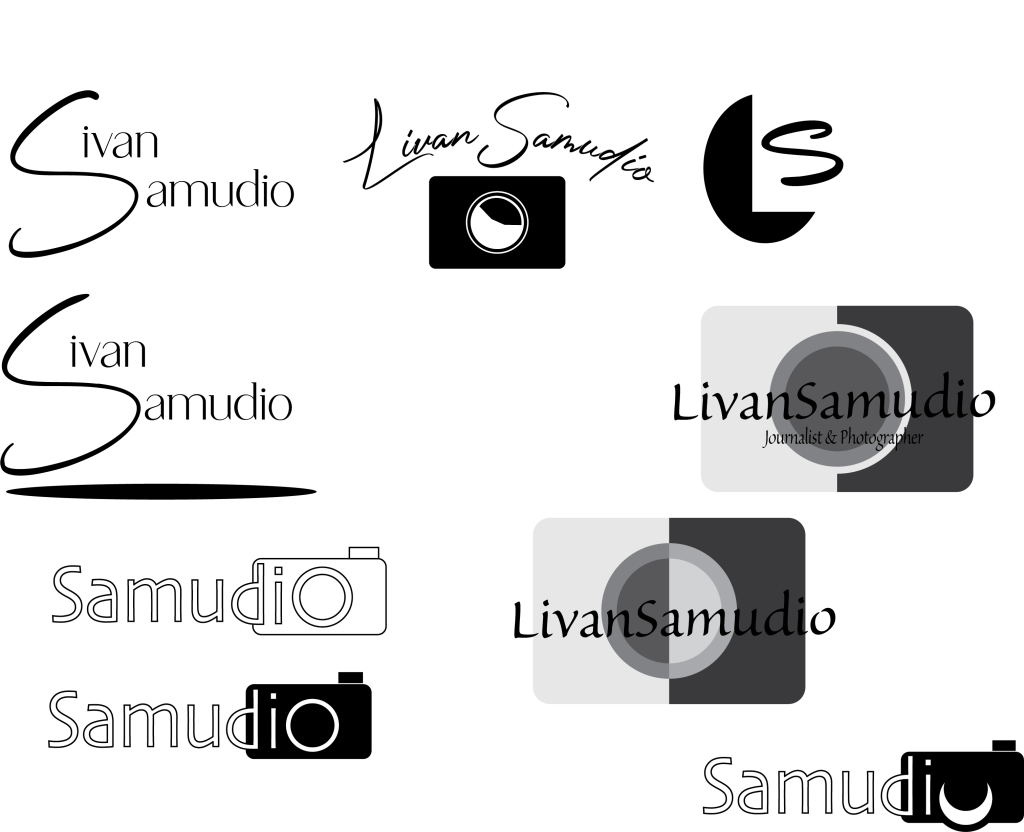
Practice Logo

This is the first time I created a logo from scratch. I really enjoyed coming up with ideas and having happy accidents on the commuter. I think the hardest thing was to come up with a design that is different from other people’s and is still simple and minimal. I still am learning and would like to see more examples of privately owned logos and different ways of the layout/composition. I would love to get good at creating logos and knowing what to put in them.

Process for Project 1

This project was challenging and fun for me. I learned a lot about adobe illustrator and all of the tools. Once I was getting the hang of the tools, then I focused more on the design elements such as balance, repetition, and scale. I enjoyed creating different scales of my subject. In my final iteration I zoomed in on my character as well as zoomed all the way out to enhance the emotional response. There was a lot I struggled with through printing the final piece to placing art boards and working with layers. I still have a lot to learn in the software, and I’m excited to learn it.

Design a site like this with WordPress.com
Get started